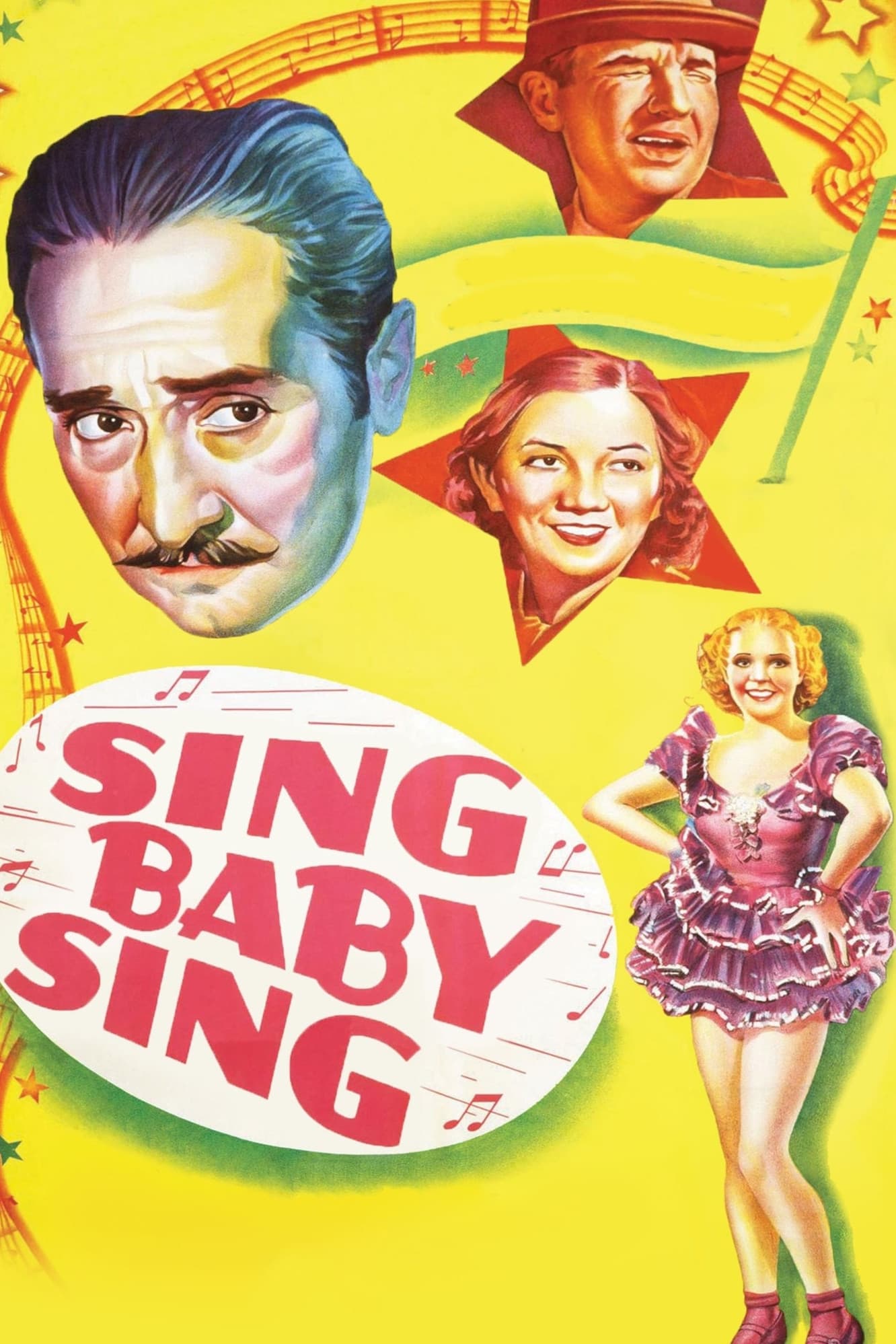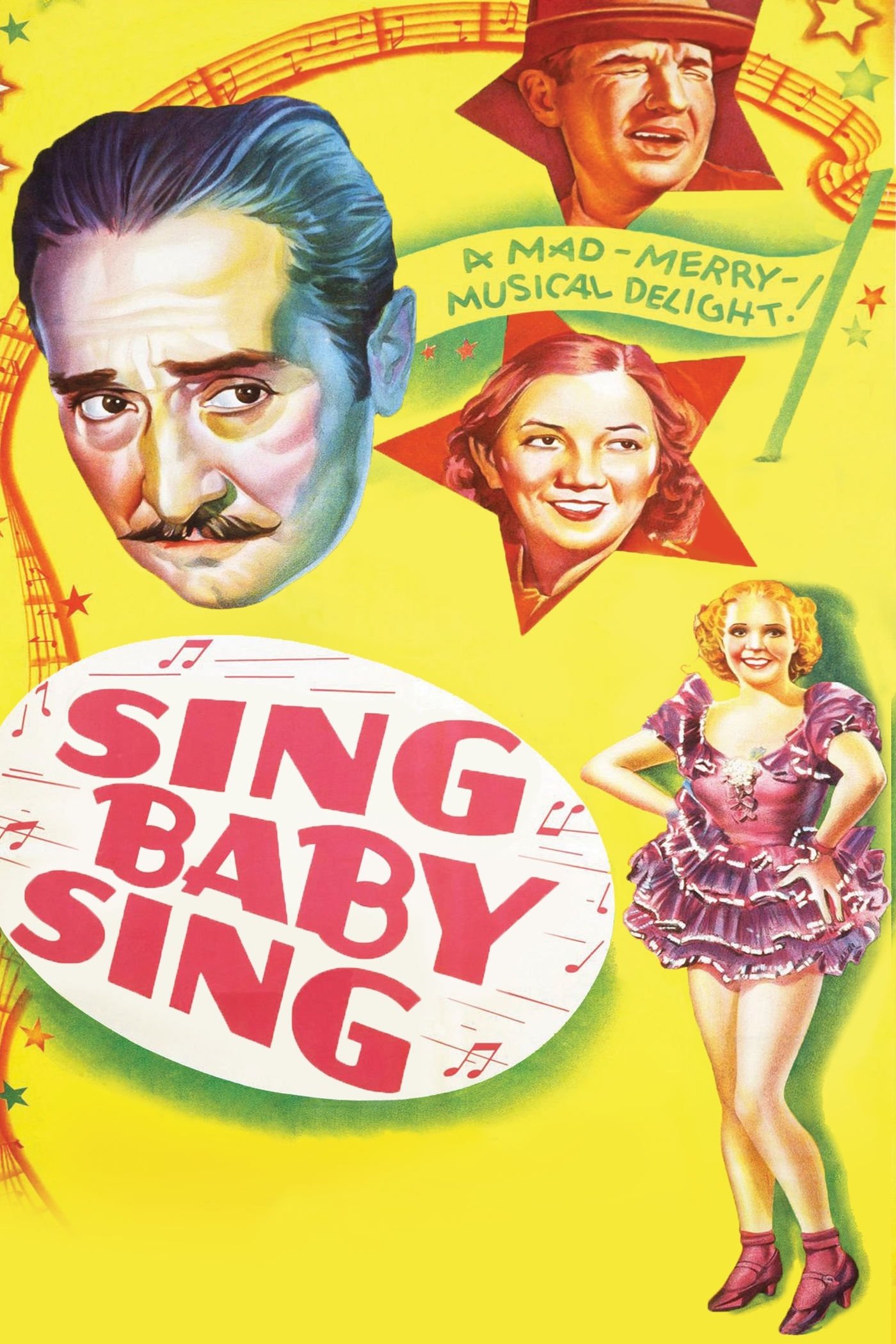
Sing, Baby, Sing (1936)
A Mad, Merry, Musical Delight!
21/08/1936
Overview
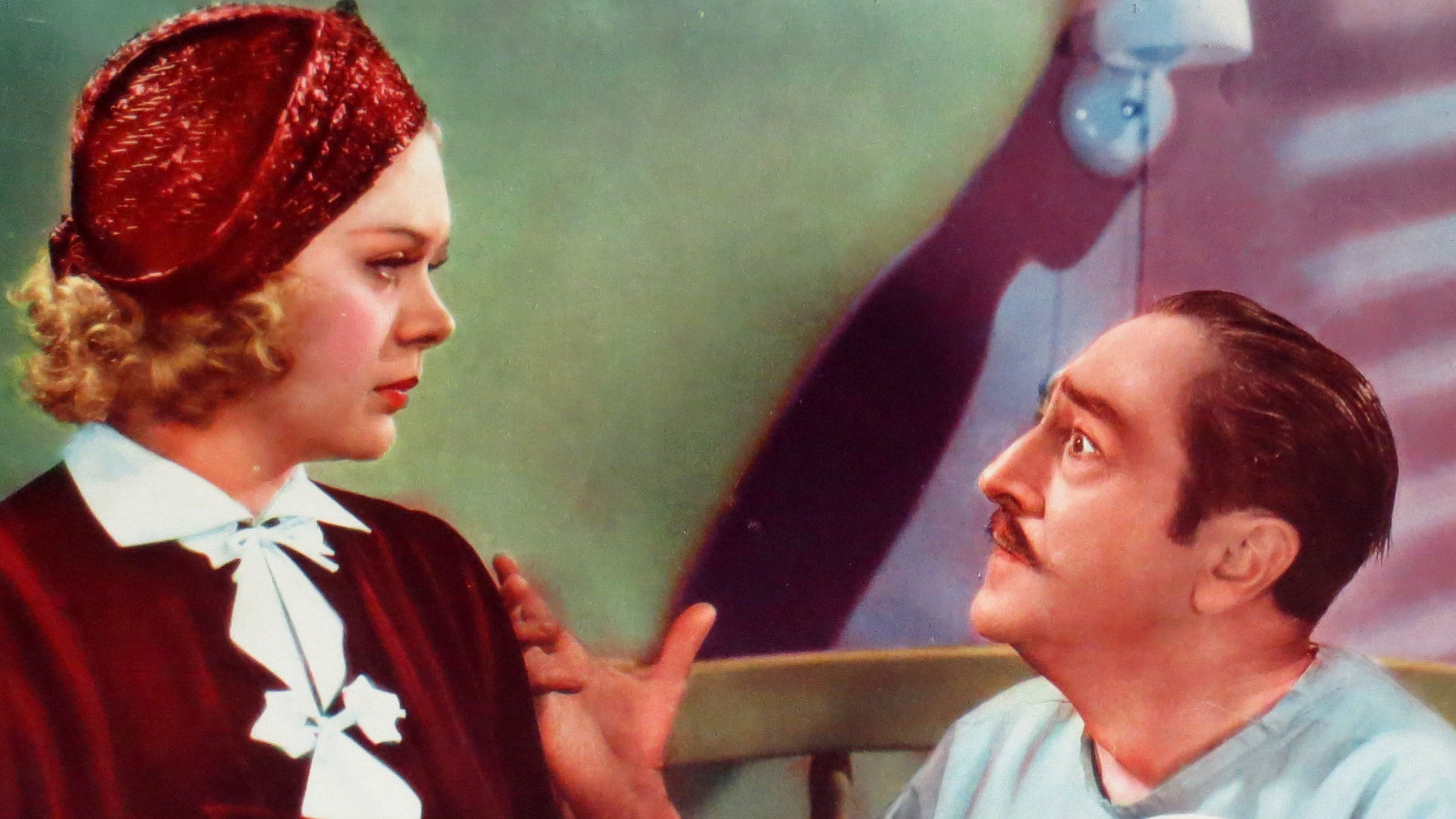
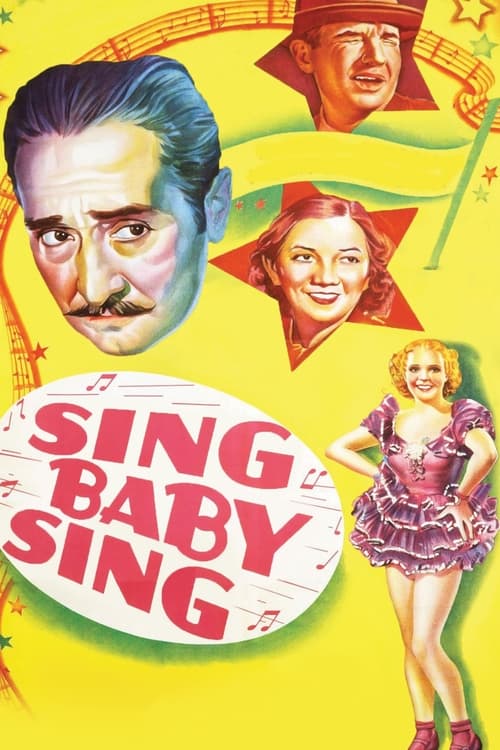
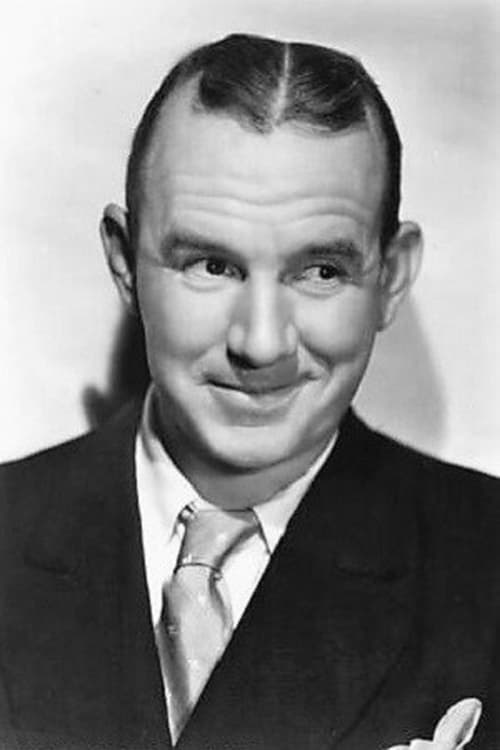
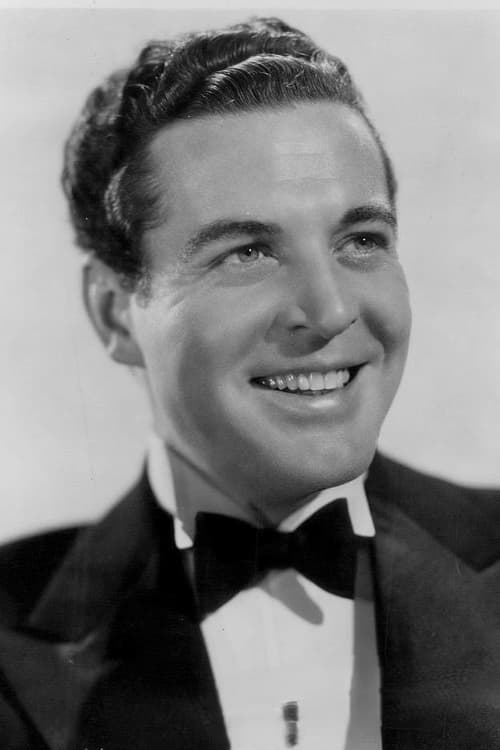
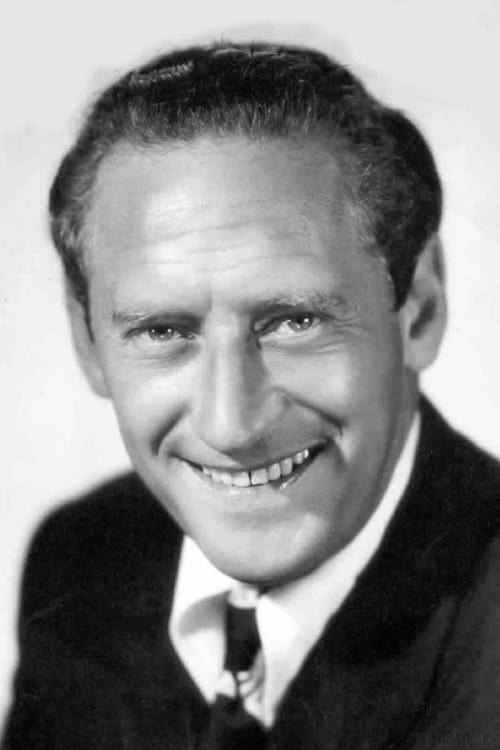
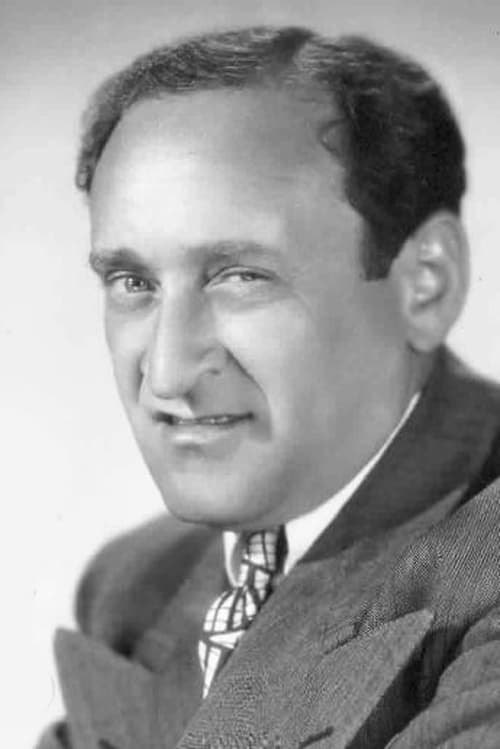
The "Caliban-Ariel" romance of fiftysomething John Barrymore and teenager Elaine Barrie is spoofed in this delightful 20th Century Fox musical. Adolphe Menjou plays the Barrymore counterpart, a loose-living movie star with a penchant for wine, women, and more wine. Alice Faye plays a nightclub singer hungry for publicity. Her agent (Gregory Ratoff) arranges a "romance" between Faye and Menjou. Eventually Faye winds up with Michael Whalen, allowing Menjou to continue his blissful, bibulous bachelorhood. Sing, Baby, Sing represented the feature-film debut of the Ritz Brothers, who are in top form in their specialty numbers--and who are awarded a final curtain call after the "The End" title, just so the audience won't forget them (The same device was used to introduce British actor George Sanders in Fox's Lancer Spy [37]).
Details
Production Companies
20th Century Fox

Social Network
IMDb: https://www.imdb.com/title/tt0028255
Wikipedia: https://www.wikidata.org/wiki/Q10371896
Facebook: No data
Instagram: No data
X: No data
Cast
Reviews (1)
Review by: CinemaSerf
Written by: CinemaSerf on 2026-01-10T13:57:36.549Z
There’s a scene in this where the successful Thespian “Farraday” (Adolphe Menjou) serenades an hot water bottle full of medical rum that shows this actor’s ability to amiably turn his hand to most things, but otherwise this is a thin story of his boozy womaniser and his misunderstood relationship with aspiring crooner “Joan” (Alice Faye). She is constantly being involved in the ropey shenanigans of her agent “Nicky” (Gregory Ratoff) who means well, but still latterly becomes something of an occupational hazard for both her, and “Farraday”, too. When I say thin, I mean that there’s very little to the actual plot. Much of the rest of this ninety minutes consists of some onstage variety performances, culminating in quite an amusing skit from the newly signed Ritz brothers doing their own version of “Frankenstein” meets “Dr. Jekyll” which has the audience in raptures. What does work is the chemistry between Faye and Menjou, and Ratoff delivers well enough too in a sort of hapless Victor McLaglen vein. It’s also remarkable that all of this effort went on performances for radio shows - usually sponsored by a soap company. The last twenty minutes or so demonstrates that with an all-female orchestra, a few singers - including Tony Martin with his pleasant enough short ballad “When Did You Leave Heaven” and some perfectly attired dancers all dolled up to the nines, before the comically scientific sketch complete with props and steaming vials of nasty chemicals. Nobody was watching. Only listening. Why go to all that effort for the wireless? It’s like those announcers at the BBC who wore white tie in the evening because they were going to broadcast in your home. If song and dance, tempered with a bit of screwball and nostalgia for family gatherings around the wireless is for you, then this ought to do the trick.
Videos
Backdrops
See all...Posters
See all...