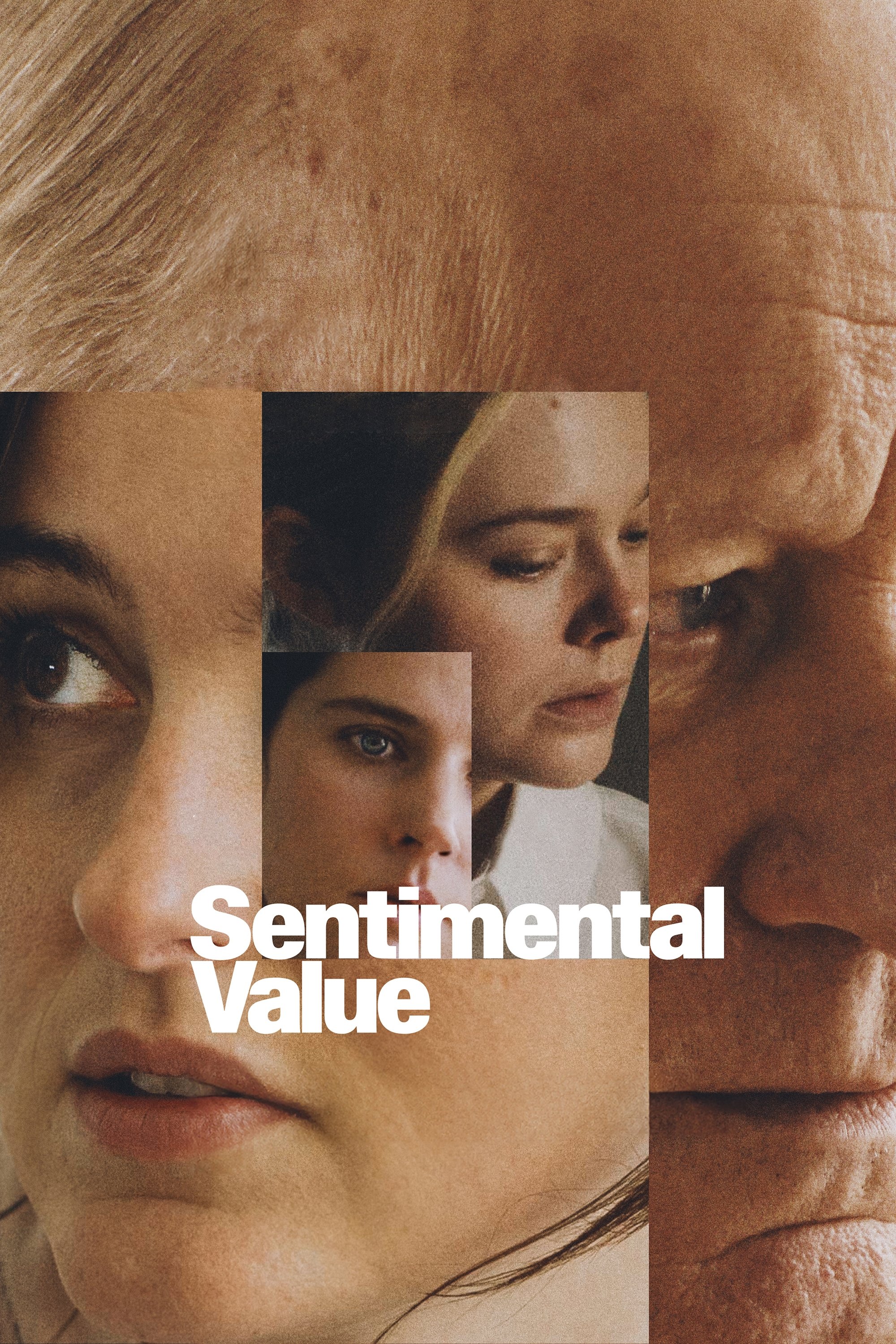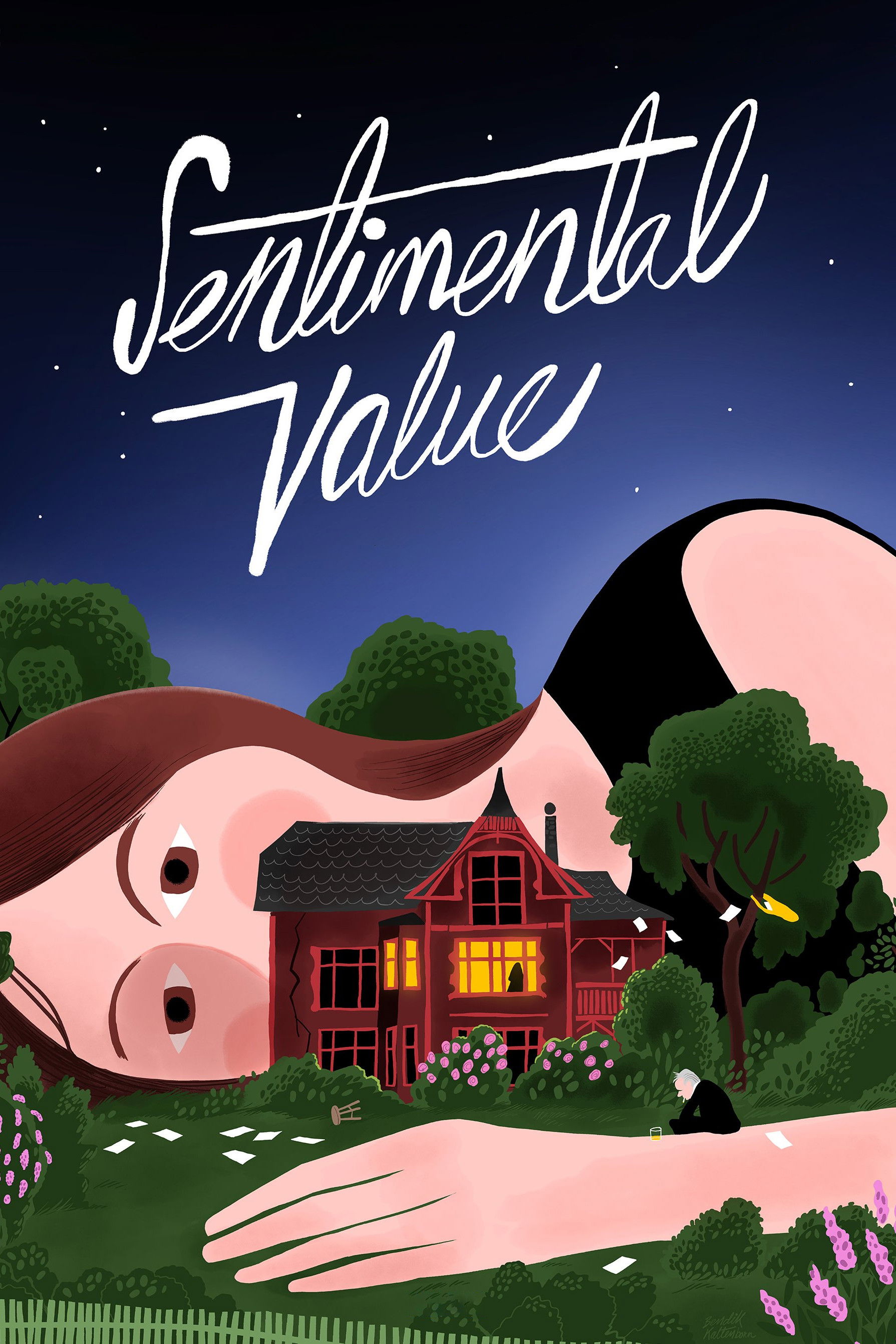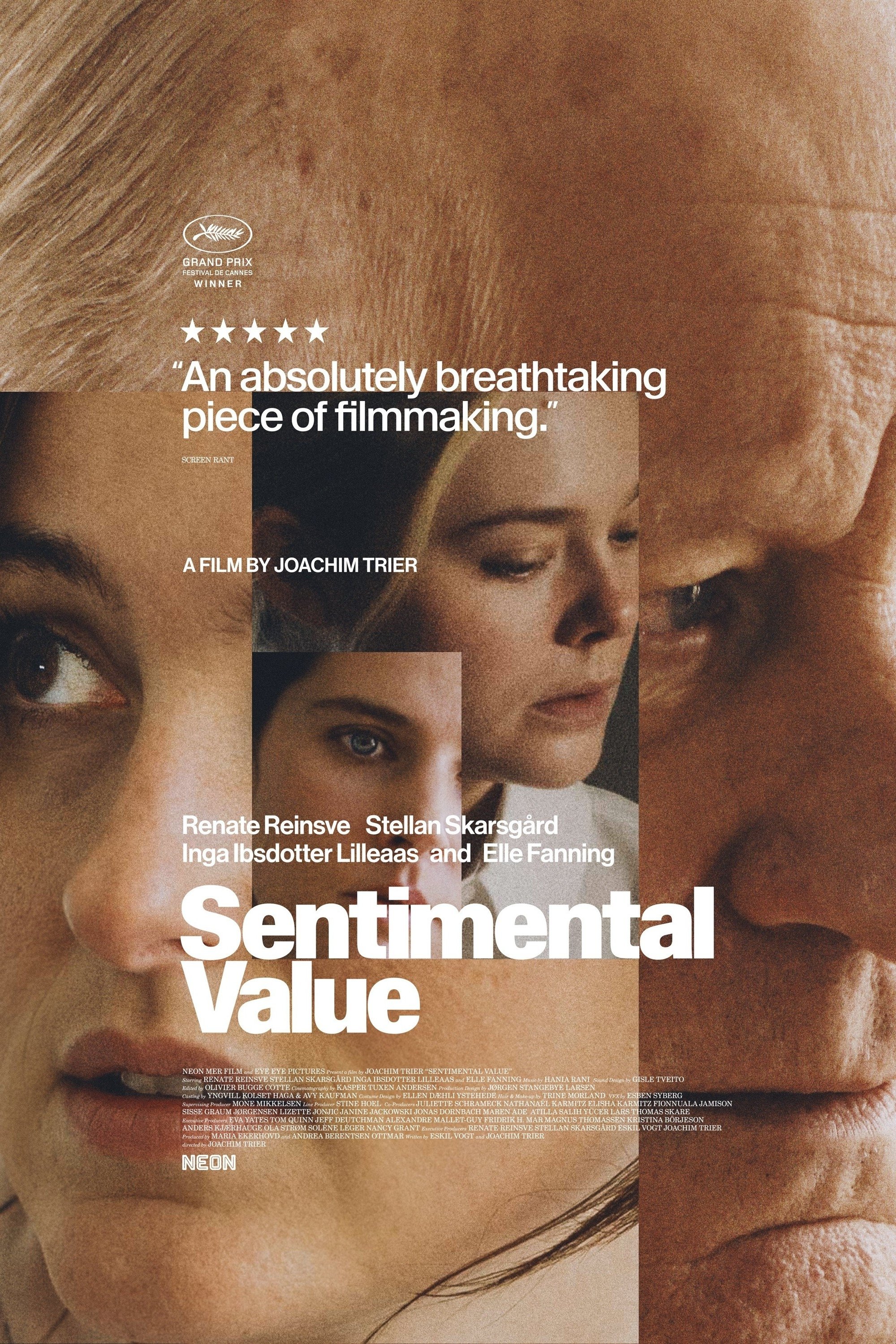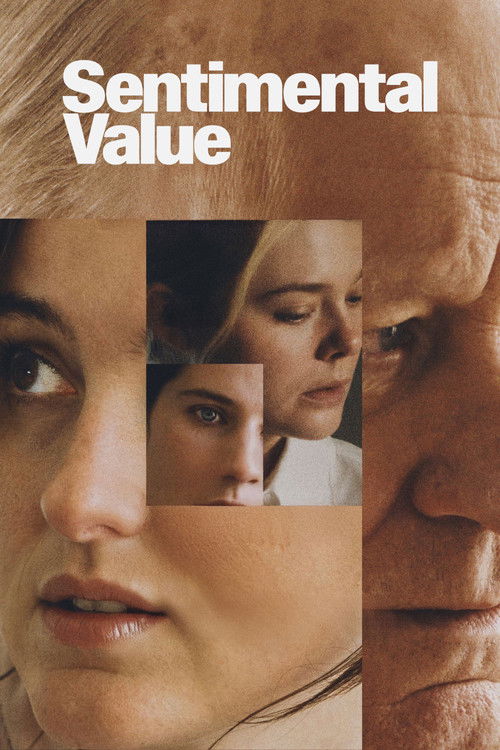
Sentimental Value (2025)
20/08/2025
Overview
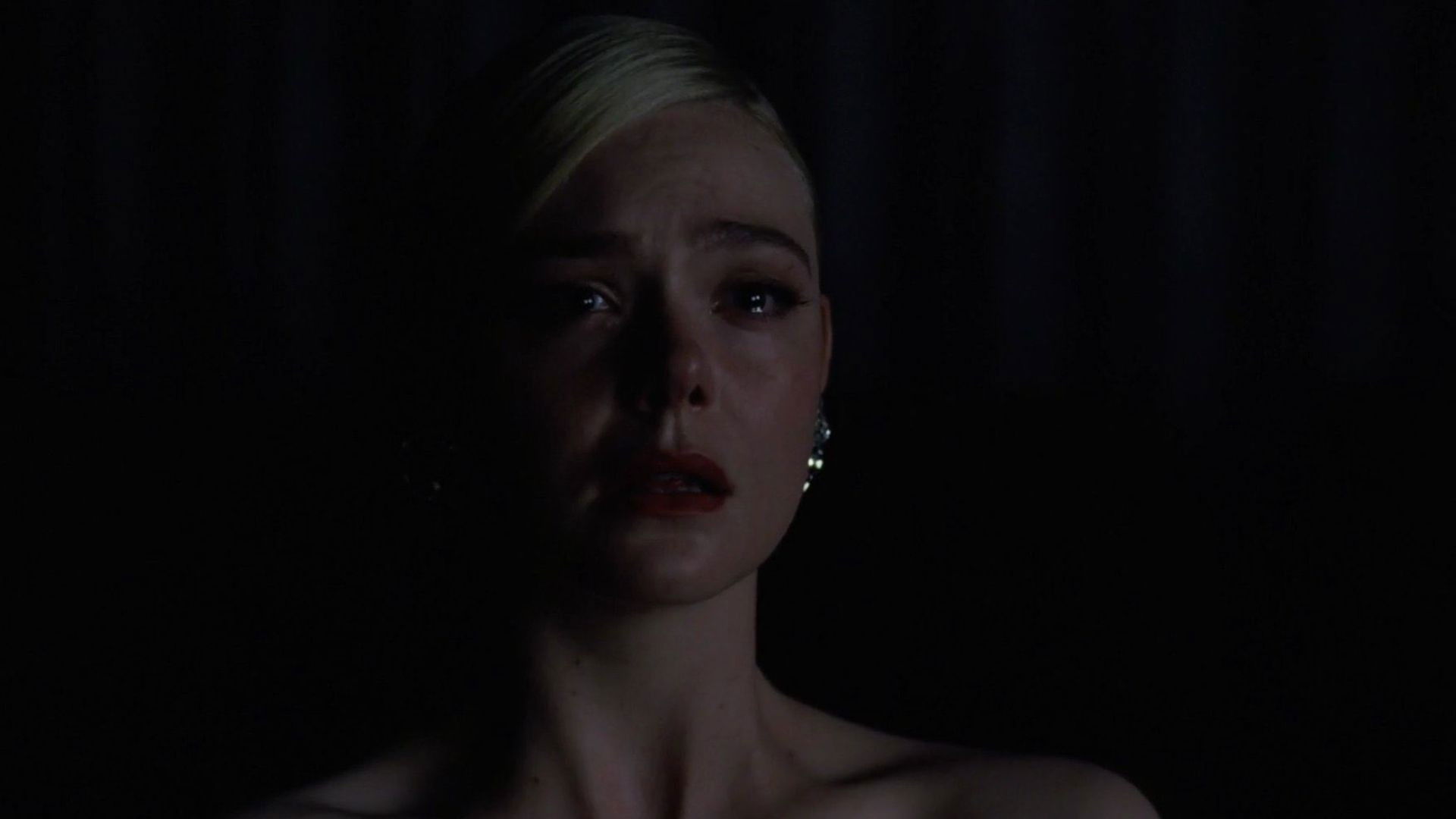
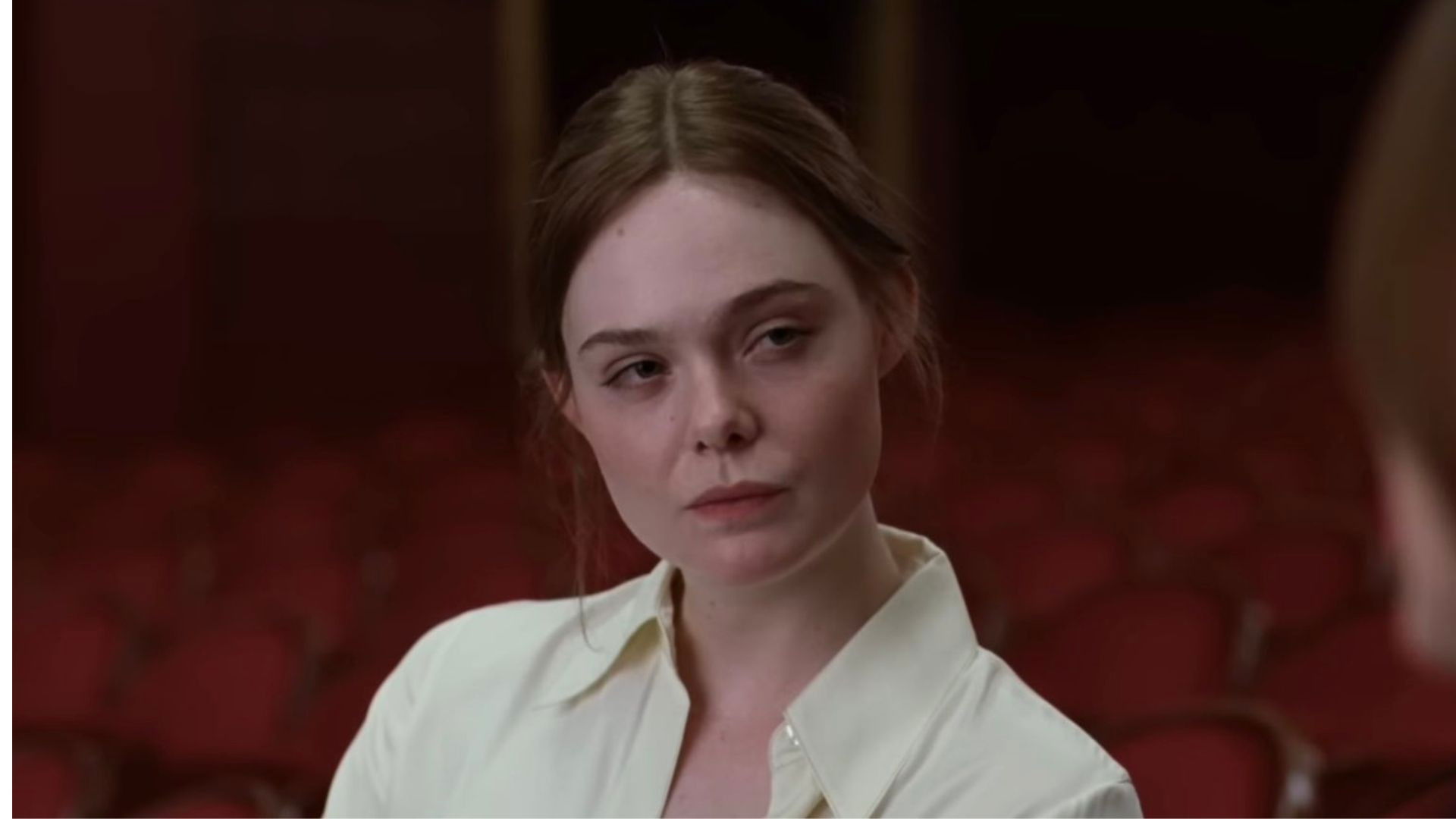
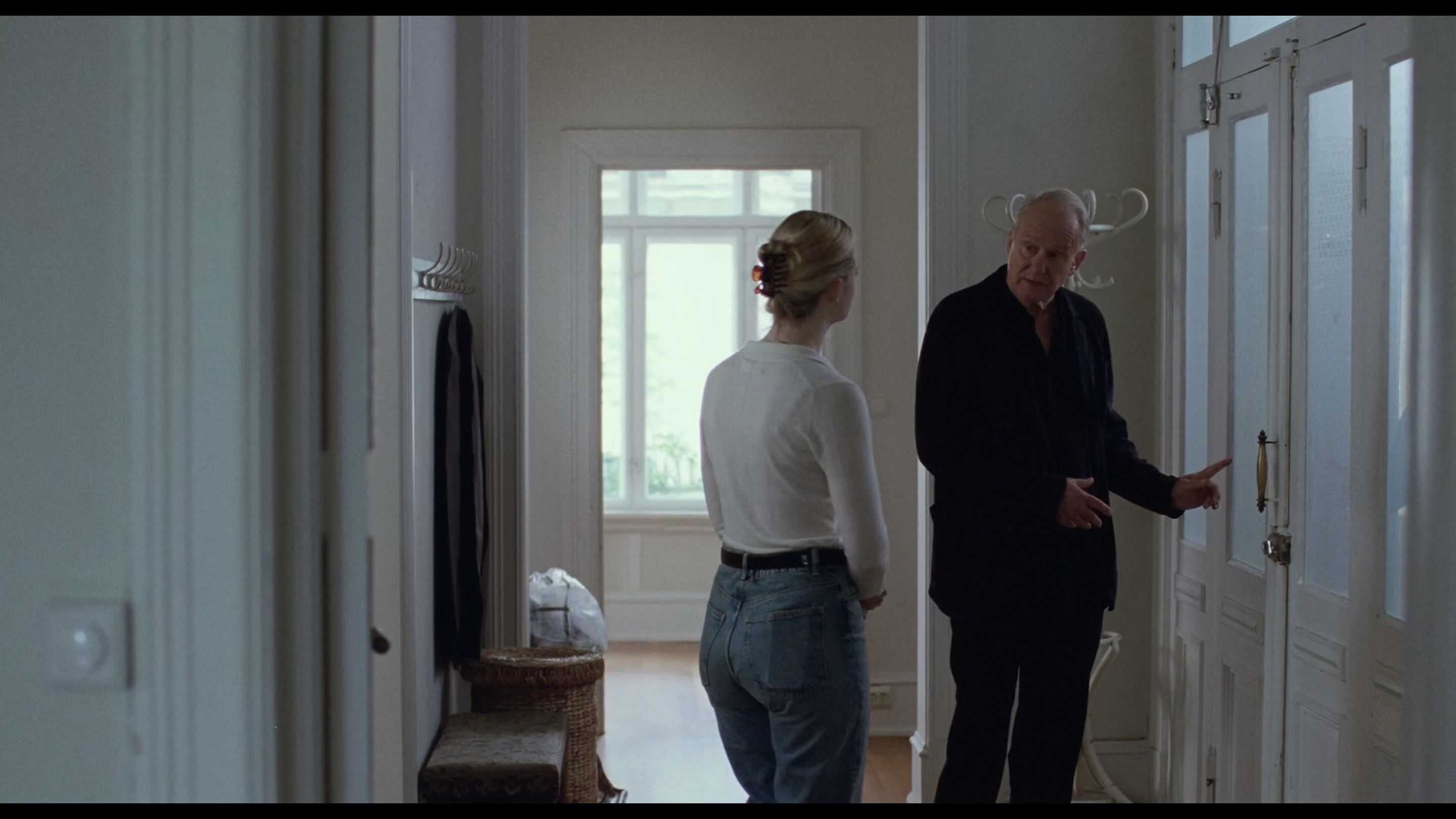
Sisters Nora and Agnes reunite with their estranged father, the charismatic Gustav, a once-renowned director who offers stage actress Nora a role in what he hopes will be his comeback film. When Nora turns it down, she soon discovers he has given her part to an eager young Hollywood star.
Status: Released
Rating: 76%
Original language: NO
Budget: $7,800,000
Revenue: $6,757,440
Official website:
https://www.neonrated.com/film/sentimental-value
Details
Production Companies
Mer Film

Eye Eye Pictures

Lumen

Zentropa Entertainments

Komplizen Film

BBC Film

Film i Väst

Oslo Filmfond

ARTE France Cinéma

Mediefondet Zefyr
Alaz Film

Don't Look Now
MK Productions

ZDF/Arte

Social Network
IMDb: https://www.imdb.com/title/tt27714581
Wikipedia: https://www.wikidata.org/wiki/Q130284179
Facebook: No data
Instagram: https://instagram.com/sentimentalvaluefilm
Cast







Reviews (3)
Review by: Manuel São Bento
Written by: Manuel São Bento on 2025-10-13T18:02:54.225Z
FULL SPOILER-FREE REVIEW @ https://talkingfilms.net/sentimental-value-review-joachim-triers-profound-meditation-on-art-grief-and-forgiveness/
"Sentimental Value is, ultimately, a mature and profoundly moving movie that resonates with the authorial mark of Joachim Trier.
The film triumphs thanks to the strength of its narrative and the excellence of the four central performances. It's a meditation on inherited pain, the intricate cost of artistic creation, and the difficult, yet essential, path to forgiveness and reconciliation. The assured direction and the melancholic atmosphere consolidate Trier's position as one of the most skillful chroniclers of human fragility.
It's a story that feels familiar, intimate, and, above all, reminds us that true sentimental value lies in the irreducible and, at times, painful bonds that define us."
Rating: B+
Review by: Brent Marchant
Written by: Brent Marchant on 2025-11-15T06:22:38.130Z
When a film has the capacity to provide a template for overcoming domestic discord, promoting forgiveness and helping to heal one’s past, it’s to be truly commended for going beyond being mere entertainment or even an admired artform. It aspires to become a noble, laudable cinematic godsend, one verging on providing a valuable service to those requiring much-needed guidance and direction in their lives. At the risk of exaggeration, such is the case with the latest offering from writer-director Joachim Trier, arguably the best work of his storied career. When aging, esteemed Scandinavian filmmaker Gustav Borg (Stellan Skarsgård) unexpectedly reconnects with the family from which he has long been estranged, his two adult daughters, Nora (Renate Reinsve) and Agnes (Inga Ibsdotter Lilleaas), are baffled by his sudden reentry into their lives. After years of conflict and incessant arguing with his wife, Gustav departed without warning, leaving his now-recently deceased spouse to raise their two daughters on her own. Despite the challenges associated with such circumstances, Nora would go on to become a successful, if troubled and lonely, stage actress, while Agnes went on to live a comparatively stable life as a wife and mother. Gustav, meanwhile, launched into a noteworthy filmmaking career, though, due to the onset of failing health and problem drinking, he hasn’t worked on a new project for some time. However, with his re-emergence into his daughters’ lives, he now hopes to change that – by making a movie that he views as a legacy production, a less-than-veiled autobiographical piece that he claims to have written for Nora and for which he would like her to play the lead. But, given the longstanding bitterness between Nora and her father, she turns him down, a major setback for his plans to proceed – that is, until Gustav meets a young American rising star, Rachel Kemp (Elle Fanning), to whom he offers the part. The director’s casting choice, in turn, unleashes a barrage of new emotional turmoil, some of which involves rehashing the past and other parts of which uncover new, previously concealed issues involving both Gustav and his daughters, as well as family members from his own past. At the same time, taking on the role of Gustav’s protagonist pushes Rachel to examine her role in this complex scenario, both for the development of her own career as an actress and how she fits into what is clearly a metaphorical vehicle for sorting out Borg family drama. As challenging as all of this can be for everyone involved, however, it also provides the players with an opportunity for healing, personal and professional growth, and a fresh start for the future. The question is, can they rise to the occasion? Filmmaker Trier thus embarks on a rather involved storyline (sometimes a little too involved for its own good), but the narrative nevertheless eagerly takes on the ambitious task of intertwining various aspects of art and life and how one might be drawn upon to address the challenges and opportunities of the other. While the picture might potentially be seen as a little overlong, the director manages to successfully cover considerable ground without belaboring his material or incorporating extraneous elements. Moreover, the deftly penned screenplay effectively keeps the picture from becoming too heavy-handed through the inclusion of strategically placed comic relief, including several delightfully witty nudges at a well-known Scandinavian furniture retailer. These assets are further enhanced by this release’s gorgeous, creative cinematography and the superb performances of its fine cast, particularly Reinsve, Skarsgård and Fanning, all of whom turn in decidedly award-worthy portrayals representing some of the best work of their respective careers. As the winner of the Grand Prize of the 2025 Cannes Film Festival and a nominee for the event’s Palme d’Or (the festival’s highest honor), “Sentimental Value” is yet another standout effort from this gifted Norwegian filmmaker, one very much in the same vein as – if not, arguably, even better than – his eminently praiseworthy previous offering, “The Worst Person in the World” (“Verdens verste menneske”) (2021). Keep an eye on this one as movie awards season unfolds.
Review by: CinemaSerf
Written by: CinemaSerf on 2026-01-05T15:09:57.839Z
Sisters “Nora” (Renate Reinsve) and “Agnes” (Inga Ibsdotter Lilleaas) are the daughters of acclaimed film director “Gustav” (Stellan Skarsgård). The former, a theatrical actor, is a bit of a loner. The latter is a little more balanced, married to “Even” (Andreas Stoltenberg Granerud) and has a son “Erik” (Øyvind Hesjedal Loven). Both have a strained relationship with their father. His past successes suggests that he was rarely there, in any qualitative sense, when they were growing up nor when tragedy impacted on the family in later years. He is currently benefitting from a bit of a revival of interest in one of his early works - a film that featured “Agnes” and he has attracted the attentions of global superstar “Rachel” (Elle Fanning). Now feeling a little revitalised, he presents a script to “Nora” that he hopes she will agree to do. She is polite but clearly wants as little to do with him as she can get away with, and so when she declines he offers it to the enthusiastic “Rachel”. Fanning serves quite well for much of the rest of the film as a conduit for exposing not just the content of a script that sails close to home, but that also addresses head-on some of the issues that the siblings have with their dad and that he understands - albeit, perhaps, belatedly. Things come to more of an head with “Agnes” when he decides that the affable young “Erik” could have a role in the film too, and now a more complete family perspective begins to emerge. I wasn’t bowled over by the story, to be honest. I’ve seen plenty of films that depict dysfunctional family’s where the kids resent their successful if often absent parents. This, though, is a much more solid and characterful study that introduces elements of joy, sadness, bitterness and potential reconciliation to a story that develops gradually for a couple of hours of intimately photographed and scripted cinema. It’s asks many a recognisable question about the aspirations of parents for children, jealousies and ambitions in a manner that is far easier for us to associate with than you might expect, and being a Nordic story there is of course suicide amongst it’s topics too. Don’t expect it to race along with entertaining histrionics and tantrums, it’s all a very measured and considered affair that proves compelling to watch as the three leads play convincingly together, and the young Loven steals his scenes.
Videos
Backdrops
See all...


Posters
See all...